
DTF
DTF Printing or Borderless Printing
Aug
DTF Printing: The Game-Changer for Small Fashion & Merch Businesses in Nigeria
There’s one printing technology that has genuinely changed the way small fashion and merchandise businesses operate in Nigeria: DTF printing, also known in many local print shops as borderless printing.
If you’re thinking about starting a custom T-shirt business, building a fashion brand, or adding personalized merchandise to an existing business, DTF printing is one of the most flexible options available today.
I’ve been building a custom merch and apparel brand for several years, and along the way, I’ve learned a lot about the printing side of the business. Here’s what you need to know before you start.
What Is DTF Printing?
DTF stands for Direct to Film.
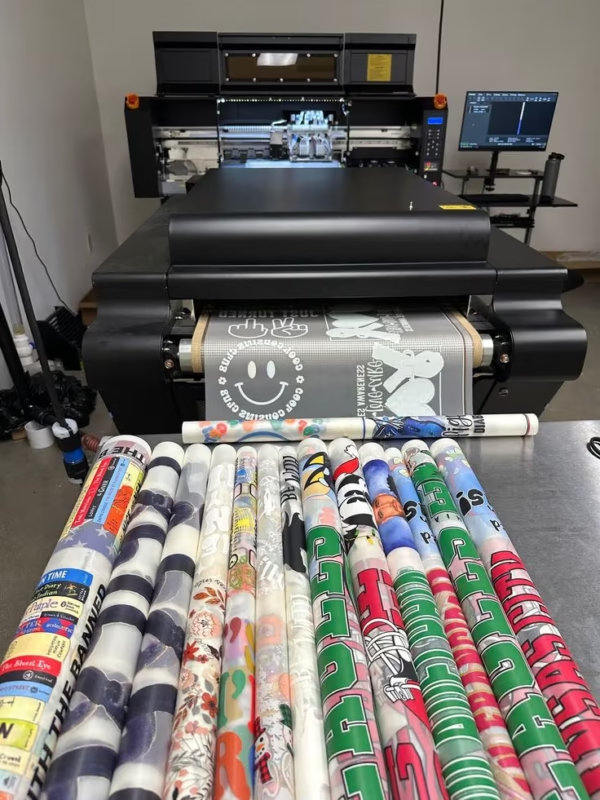
Unlike traditional printing methods where the design is printed directly onto the garment, DTF printing works by first printing your artwork onto a special transfer film.
The printed film is then treated with adhesive powder and transferred onto the fabric using a heat press.
The result is a vibrant, detailed print that can be applied to different types and colours of fabric.
DTF is particularly useful because it can reproduce full-colour artwork, fine details, gradients, photographs, logos and complex designs without requiring the complicated setup associated with some traditional printing methods.
DTF Printing Is Also Called “Borderless Printing”
If you’re searching for a DTF printing vendor in Nigeria, don’t search for only “DTF printing.”
Many local print shops advertise the service as borderless printing.
So, when looking for a vendor, try searching for:
“DTF printing” + your location
or
“Borderless printing” + your location.
This can help you find more vendors and compare their prices, print quality and turnaround times.
Why DTF Printing Is Great for Small Merch Businesses
For small businesses, one of the biggest challenges with traditional printing is the cost of producing small quantities.
You may have a great design, but you don’t necessarily want to print 100 or 200 pieces before knowing whether customers will actually buy them.
That’s where DTF becomes extremely useful.
1. You Can Produce Small Quantities
One of the biggest advantages of DTF printing is its flexibility.
Depending on the printer or vendor, you can produce transfers for a single shirt or a small batch without committing to a large production run.
This is perfect for testing new designs before investing heavily in stock.
2. It Works on Dark and Light Fabrics
DTF printing can be used on different fabric colours, including black and other dark-coloured garments.
That gives you much more freedom when developing your clothing collection.
You’re not limited to white or light-coloured shirts.
3. It Handles Detailed Designs
If your design contains:
- Gradients
- Small details
- Multiple colours
- Illustrations
- Photographs
- Shadows
- Complex patterns
DTF can reproduce these elements very effectively.
This makes it a great option for modern fashion brands and custom merchandise businesses.
4. It’s Practical for Small-Batch Production
For a small business, you want a printing method that doesn’t force you to spend a lot of money before you’ve made a sale.
DTF allows you to produce smaller quantities, test designs and respond quickly to customer orders.
That can make it easier to start small and scale gradually.
5. It’s Widely Available
DTF printing has become increasingly popular among print shops and garment businesses in Nigeria.
That means finding a vendor, comparing prices and outsourcing your printing can be relatively straightforward.
You don’t necessarily need to buy a DTF printer yourself to start a custom clothing business.
What Format Should Your Design Be?
This is one area where many beginners make mistakes.
You can have an amazing design, but if the artwork isn’t properly prepared, the final print may not look as good as expected.
For most DTF jobs, PNG with a transparent background is a good choice.
The transparent background is important because you don’t want an unwanted white or coloured box surrounding your artwork.
Recommended Artwork Specifications
For a typical DTF job, aim for:
- Format: PNG
- Background: Transparent
- Resolution: 300 DPI or higher at the final print size
- Artwork: Sharp and high resolution
- Colour: Properly prepared for printing
- Size: Based on the actual placement and garment size
For a standard front/chest design, something around 12 × 16 inches may be suitable, but don’t treat that as a universal rule.
The correct size depends on the garment, placement and the specific printing requirements.
Here’s an important tip:
Don’t confuse DPI with image quality.
Taking a small, blurry image and simply changing it from 72 DPI to 300 DPI doesn’t magically make it high resolution.
If possible, start with a properly designed, high-resolution file from the beginning.
What If You Can’t Design?
This shouldn’t stop you from starting a custom merchandise business.
You don’t have to be a graphic designer to build a clothing brand.
If you don’t know CorelDRAW, Photoshop or Canva, there are several options available.
You can:
- Hire a graphic designer.
- Buy professionally prepared design files.
- Purchase commercially licensed artwork.
- Work with a printing company that also provides graphic design services.
There are ready-made, print-ready designs that you can purchase and send directly to your DTF printing vendor.
However, there’s one important thing to remember:
Always check the licence before using purchased artwork commercially.
A design being available for download doesn’t automatically mean you have permission to print and sell it on T-shirts.
Start Small. Test. Learn. Scale.
You don’t need a huge clothing factory to start a custom merch business.
You can begin with a few strong designs, print only what you need, test what customers respond to, and gradually build your collection.
That’s one of the reasons DTF printing has become such an attractive option for small fashion brands, entrepreneurs and merchandise businesses in Nigeria.
The technology gives you the flexibility to experiment without committing to huge production quantities.
And when a design starts selling?
Print more.
That’s the beauty of building a business around on-demand custom merchandise.
